
Gustave Courbet in Essen: the Museum Folkwang presents a major retrospective of the pioneer of modern art
Museum Folkwang is dedicating a major retrospective – I, Gustave Courbet. Painter and Rebel – to one of the most influential artists of the 19th century. From 17 July to 8 November 2026, the Museum Folkwang will be exhibiting 100 works from all periods of the French artist’s career – including 85 paintings. The exhibition is complemented by drawings by the artist, as well as a carefully curated selection of historical photographs and contemporary documents.
The exhibition focuses on Gustave Courbet’s (1819–1877) significance as a pioneer of modern painting. Courbet was not only an artistic innovator, but also helped shape a new self-image of the artist as an independent, outspoken and public figure. He rejected the idealised aesthetics of his time and instead depicted the lives of ordinary people and social reality in his art.
Courbet viewed painting as a form of resistance: his approach to traditional pictorial genres and his painting technique, which often allows the material presence of the paint to shine through, make him one of the most important exponents of realism. Courbet grew to became a role model for subsequent generations of artists far beyond France’s borders.
The extensive exhibition in Essen features around 90 works, including major pieces such as Le Fou de peur (1844), L’Après-dînée à Ornans (1849), Jo, la belle Irlandaise (1866), L’Origine du Monde (1866) and L’Homme à la pipe (1849). Spanning some 900 square metres, the exhibition brings together loans from international museums and collections, including Musée d’Orsay in Paris, Metropolitan Museum of Art in New York, Nasjonalmuseet in Oslo, Nationalmuseum in Stockholm, Alte Nationalgalerie in Berlin and Musée Fabre in Montpellier as well as from numerous private collections.
The Retrospective
For Museum Folkwang, the retrospective presents a unique opportunity: it ties in with the museum’s significant collection of French art. For example, Cézanne’s The Bibémus Quarry from the Folkwang Collection in Essen will be shown alongside works by Courbet. This allows visitors in Essen to experience first-hand Courbet’s influence on the development of modern painting.
The exhibition’s nine sections are devoted to the key stages of the artist’s life and the central themes of his work. It explores key motifs in Courbet’s extensive oeuvre: self-image and landscape, social reality, the public sphere, nude depictions as well as politics and exile.
The exhibition opens with Courbet’s striking self-portraits, which trace his development from a young, as yet largely unknown artist to a central figure in the French art world. He portrays himself as a rebel, a dreamer or a loner, thereby consciously shaping his public image as an artist. Major works such as Le Fou de peur reveal just how closely his self-image and artistic programme were intertwined from the very beginning.
Another focus is on the landscapes of his home region, Franche-Comté, around his birthplace, Ornans. Courbet saw direct observation of nature as a means of depicting reality and of approaching an unadulterated truth through his painting. The landscapes, rock formations, caves and waterfalls became the starting point for his new conception of nature. With his material-focused, impasto style of painting, Courbet developed a visual language that paved the way for modernism.
Equally influential are Courbet’s depictions of social reality. Works such as L’Après-dînée à Ornans mark his radical break with academic ideals: instead of historical or mythological subjects, the focus shifts to everyday people and social reality.
Courbet’s conflict-ridden relationship with the Academy and the Salon, as well as his deliberate assertion of his independence as an artist, are the focus of the following sections of the exhibition. Hunting scenes and seascapes reveal his fascination with nature in all its forms: from dramatic depictions of animals to the powerful wave scenes of the French coastline.
A separate gallery is devoted to portraits and nudes of women. Courbet broke away from the ideals of academic beauty and depicted women with a directness that was unprecedented at the time.
Rather than idealised beauty, the focus is on real physicality, the materiality of the painting style and the immediacy of the figures. At the same time, he draws on traditional pictorial conventions and develops them further – for example in Jo, la belle Irlandaise or L’Origine du Monde, in which Courbet radicalises the directness of the nude and focuses exclusively on the female genitalia
A separate chapter explores Courbet’s engagement with the then-fledgling art of photography: historical photographs by leading French photographers such as Gustave Le Gray and Henri Le Secq, drawn from the Museum Folkwang’s internationally renowned photographic collection, are juxtaposed with Courbet’s landscapes, seascapes and still lifes. These comparisons open up new perspectives on Courbet’s artistic vision and reveal the close links between painting and the medium of photography.
The exhibition then explores Courbet’s political activism during the Paris Commune and his conviction. It concludes with works from his exile in Switzerland. These works speak of the loss of his homeland and the melancholy of his final years, yet at the same time of the unbroken creative energy of an artist whose influence extends well into the modern era.
“The exhibition presents Courbet as a driven figure who took on various roles, studied the history of painting, revitalised art and strove for success – not by conforming, but as a rebel and revolutionary – in art as in life.
The fact that so many exceptional international loans from museums and private collections are coming to Essen is a great success and the result of close collaboration with the Leopold Museum in Vienna and numerous lenders,” says Peter Gorschlüter, Director of the Museum Folkwang.
Under the High Patronage of Federal President Frank-Walter Steinmeier and Emmanuel Macron, President of the French Republic, and the Honorary Patronage of Alexander Van der Bellen, Federal President of the Republic of Austria.
Leopold and Folkwang
I, Gustave Courbet. Painter and Rebel is being organised in collaboration with Leopold Museum in Vienna. The exhibition has already attracted around 130,000 visitors in Vienna. It will be on display at the Museum Folkwang from 17 July.
I, GUSTAVE COURBET
Painter and Rebel
17 July – 8 November 2026
Opening: Thursday, 16 July, 7 pm
In collaboration with the Leopold Museum, Vienna.
Main sponsor: E.ON
Sponsors: GENO BANK ESSEN and Bankhaus Bauer
Funded by: Ministry of Culture and Science of the German state of North Rhine-Westphalia
Admission: €16 (regular) / €12 (reduced)
Tickets: museum-folkwang.ticketfritz.de
Guided tours (Visitors’ Centre): +49 201 8845444, info@museum-folkwang.essen.de
The catalogue is published by Verlag der Buchhandlung Walther König, Cologne (price:. € 39,90)
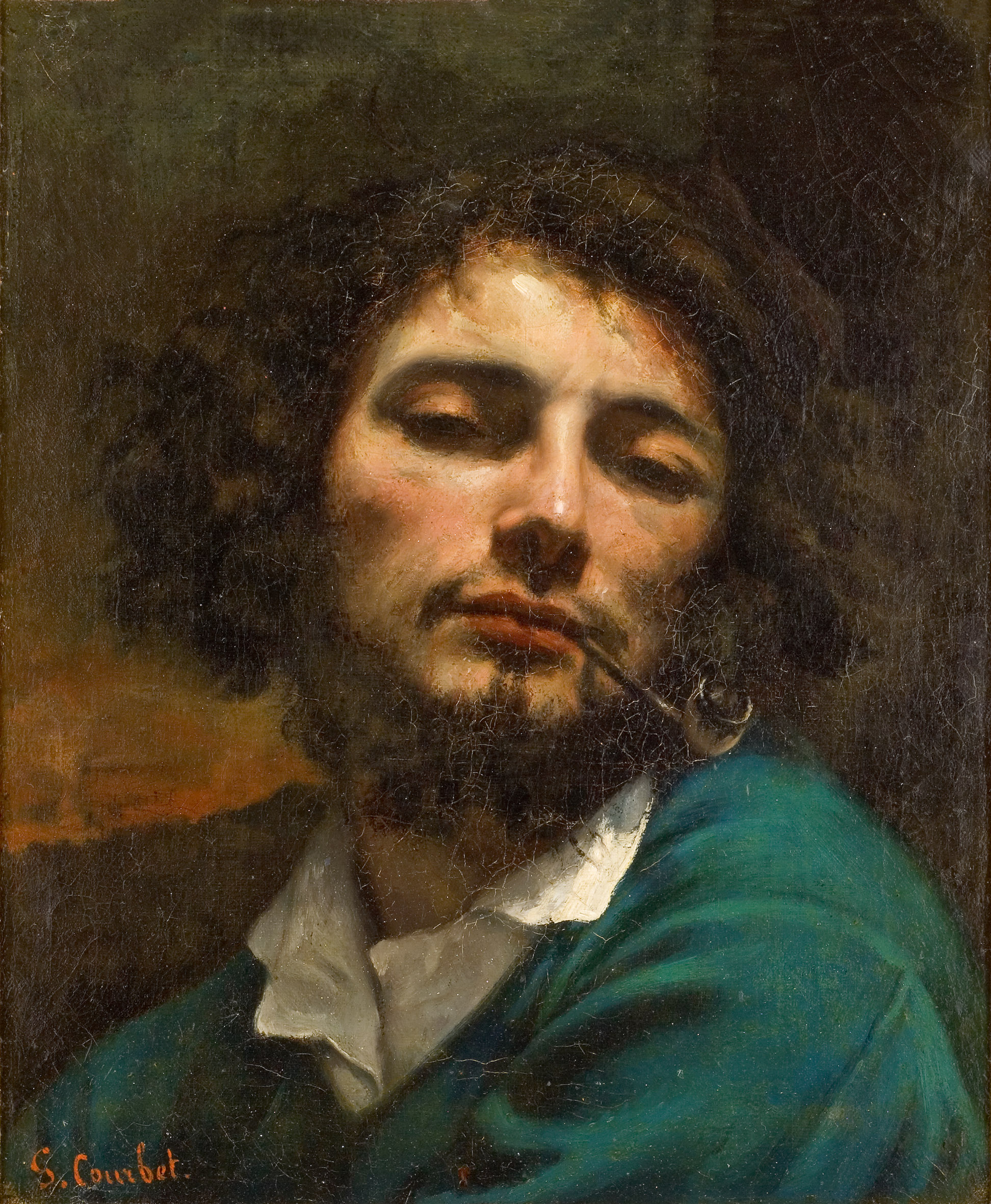
Gustave Courbet
L‘Homme à la pipe, c.1849
Oil on canvas,
45,8 × 37,8 cm
© Musée Fabre de Montpellier Méditerranée Métropole / Photo: Frédéric Jaulmes
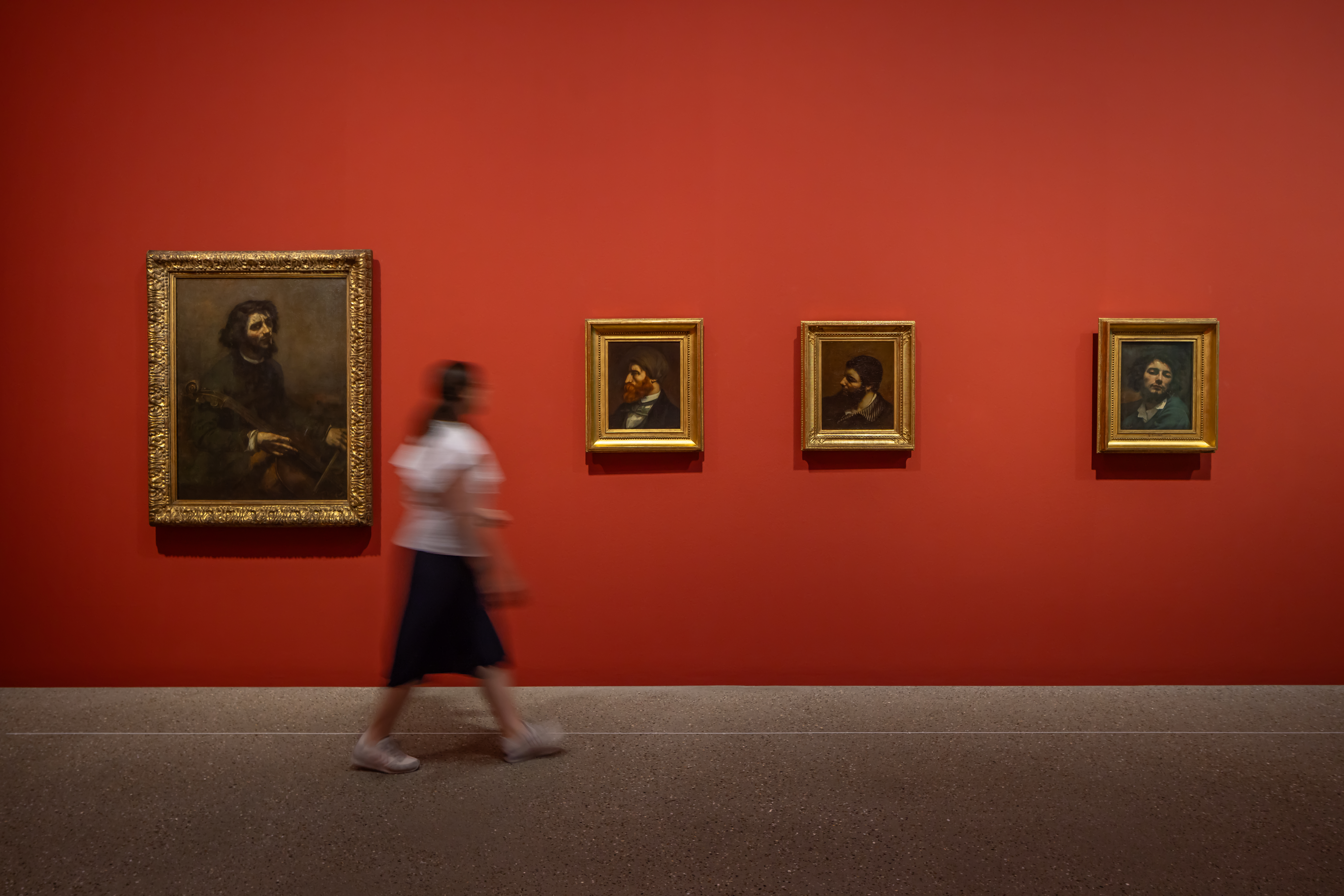
Installationsansicht Ich, Gustave Courbet. Maler und Rebell
Installationsansicht mit Le Violoncelliste, Portrait de Bruyas de profil, Autoportrait dit au col rayé und L‘Homme à la pipe
© Foto: Sebastian Drüen; Museum Folkwang, Essen
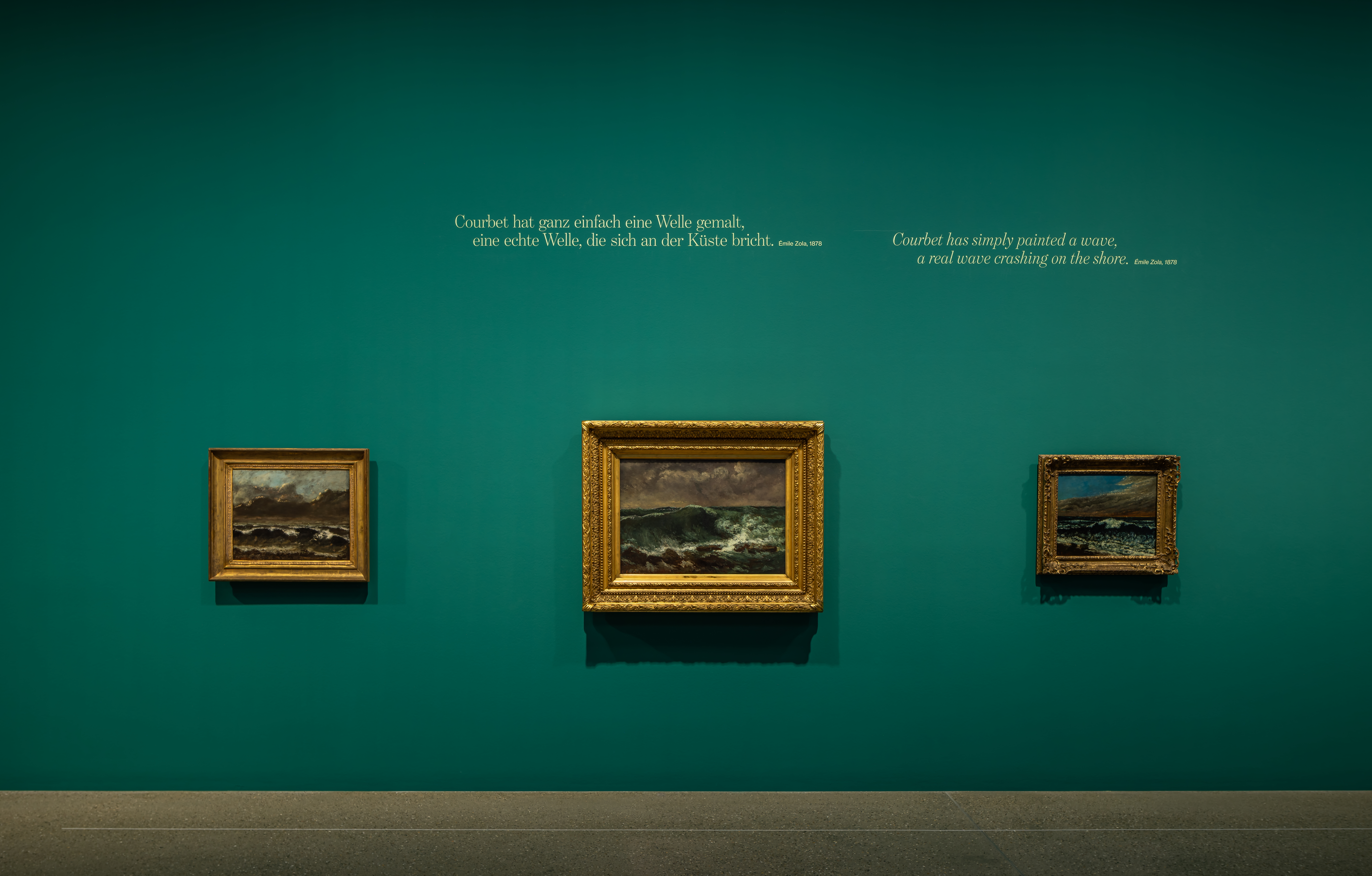
Installationsansicht Ich, Gustave Courbet. Maler und Rebell
Installationsansicht Vagues déferlantes avec trois voiliers, La Vague und La vague
© Foto: Sebastian Drüen; Museum Folkwang, Essen
Share on

Gustave Courbet
L‘Homme à la pipe / Der Mann mit der Pfeife, um 1849
Öl auf Leinwand,
45,8 × 37,8 cm
© Musée Fabre de Montpellier Méditerranée Métropole / Foto: Frédéric Jaulmes

Installationsansicht Ich, Gustave Courbet. Maler und Rebell
Installationsansicht mit Le Violoncelliste, Portrait de Bruyas de profil, Autoportrait dit au col rayé und L‘Homme à la pipe
© Foto: Sebastian Drüen; Museum Folkwang, Essen

Installationsansicht Ich, Gustave Courbet. Maler und Rebell
Installationsansicht Vagues déferlantes avec trois voiliers, La Vague und La vague
© Foto: Sebastian Drüen; Museum Folkwang, Essen